Korean Beef Sesame Noodles in 20 Minutes Recipe
If you’re looking for a quick, flavorful dinner that feels like a cozy night out but comes together in your own kitchen, you’re going to love this Korean Beef Sesame Noodles in 20 Minutes Recipe. It’s one of those go-to meals I keep returning to when I want something packed with umami, a little spice, and a whole lot of comfort – all without standing over the stove for hours. Seriously, these noodles bring together tender, savory beef, an addictive sauce with just the right kick, and crunchy veggies, making it a family favorite in no time.
Why This Recipe Works
- Fast and Flavorful: Ready in under 20 minutes without sacrificing rich, layered taste.
- Balanced Sauce: A perfect blend of sweet, spicy, salty, and tangy that hugs every noodle and bit of beef.
- Simple Ingredients: Uses easy-to-find pantry staples with fresh ginger and garlic making it special.
- Versatile and Fresh: Easily tweaked for dietary preferences and packed with fresh veggies and herbs at the end.

Ingredients & Why They Work
This Korean Beef Sesame Noodles in 20 Minutes Recipe brings together ingredients that create a harmonious dance of textures and flavors. The sauce is where the magic happens, balancing spicy gochujang with sweet honey and tangy rice vinegar, while the stir fry ingredients add color, crunch, and meaty depth.

- Garlic: Fresh garlic gives a pungent kick that wakes up the entire dish.
- Fresh Ginger: Adds bright warmth that complements the beef perfectly.
- Tamari or Soy Sauce: The salty umami foundation of this recipe – tamari is great if you want gluten-free.
- Honey: Delivers natural sweetness that balances spicy gochujang.
- Rice Vinegar: Brings acidity that lifts and lightens the sauce.
- Gochujang: Korean chili paste that adds authentic spice and a little depth.
- Toasted Sesame Oil: Infuses a nutty aroma that’s impossible to resist.
- Brown Rice Noodles: Their chewy texture is perfect for soaking up the sauce.
- Sesame Oil (for stir fry): Helps cook the veggies and beef with that signature toasty flavor.
- Mixed Stir Fry Vegetables: Adds color, crunch, and freshness – I like bell peppers, snap peas, and carrots.
- Shallots: Soften and sweeten when cooked, rounding out the beef’s flavor.
- Flank Steak or Chicken Breast: Thinly sliced for quick cooking and tender bites.
- Toasted Sesame Seeds: For garnish, bringing texture and extra nuttiness.
- Fresh Basil: Adds unexpected freshness and herbaceous brightness to finish.
Tweak to Your Taste
I love how versatile this Korean Beef Sesame Noodles in 20 Minutes Recipe is — you can easily play around with the spice level, protein, and veggies. Feel free to swap in what you have or like best, and I promise it still tastes amazing.
- Protein Swap: When I’m out of flank steak, I often use chicken breast or even tofu for a vegetarian twist, adjusting cooking times accordingly.
- Heat Level: If you’re spice shy, cut the gochujang back to one tablespoon; if you love heat, add a drizzle of chili oil right before serving.
- Veggie Variations: Broccoli, mushrooms, or bok choy work beautifully, especially if you want to lighten it up or sneak in more greens.
- Make it Gluten-Free: Use tamari instead of soy sauce and double-check your noodles to keep it safe for gluten sensitivities.
Step-by-Step: How I Make Korean Beef Sesame Noodles in 20 Minutes Recipe
Step 1: Whip Up the Sauce
Start by combining the garlic, fresh ginger, tamari (or soy sauce), honey, rice vinegar, gochujang, and toasted sesame oil in a jar or bowl. I like to shake mine in a jar so it emulsifies nicely, but whisking works just as well. This sauce is your flavor powerhouse, so tasting it now and adjusting honey or gochujang to your liking is a smart move.
Step 2: Cook the Noodles
Next, cook your brown rice noodles according to the package instructions – usually around 7 to 8 minutes. Drain them and rinse well under cold water to stop cooking and keep them from sticking together. Pro tip: Giving the noodles a quick toss with a touch of sesame oil keeps them silky and separated when you return them to the pan later.
Step 3: Sizzle the Veggies
Heat 1 tablespoon of sesame oil in a large skillet over high heat, then toss in your mixed vegetables. Give them a quick stir and cook for about 2-3 minutes until they start to get tender but still have a bit of crunch. Pour in 2 tablespoons of the sauce, stir so they’re well coated, then remove them from the pan and set aside. This keeps the veggies crisp and flavorful without overcooking once the beef goes in.
Step 4: Cook the Shallots and Beef
In the same pan, add the remaining tablespoon of oil. Add the sliced shallots and let them cook for about 2 minutes until they soften and start to caramelize – they add such a lovely sweetness here. Then add your thinly sliced flank steak (or chicken). Don’t stir immediately – let it sear undisturbed for about 2 minutes to get a nice crust. Once seared, toss it around, add the rest of the sauce, and let it simmer for one minute so the flavors meld.
Step 5: Bring It All Together
Now toss in the drained noodles and stir-fried veggies. Cook for another 2-3 minutes, stirring often, so everything gets nicely coated and heated through. Remove from heat and stir in fresh basil and toasted sesame seeds – these final touches brighten things up and add a wonderful fresh crunch.
Pro Tips for Making Korean Beef Sesame Noodles in 20 Minutes Recipe
- Prep Ahead Sauce: Make your sauce the night before to deepen the flavors and speed up dinnertime prep.
- Thinly Slice Meat: Freeze the beef for 15 minutes before slicing to get paper-thin slices that cook evenly and quickly.
- Use High Heat: Cooking veggies and beef on high heat ensures a quick sear and keeps everything tender-crisp.
- Don’t Skip the Fresh Basil: Stirring in basil just before serving adds a bright, fresh note that balances the rich sauce beautifully.
How to Serve Korean Beef Sesame Noodles in 20 Minutes Recipe

Garnishes
I always top these noodles with extra toasted sesame seeds—they add a wonderful crunch and that signature nutty aroma. And don’t forget fresh basil; it’s my secret weapon for freshness. Sometimes I throw on a few chopped scallions or a pinch of crushed red pepper flakes if I’m in the mood for extra heat. These little touches always impress guests and bring the dish alive.
Side Dishes
I like pairing this recipe with a simple cucumber kimchi or quick-pickled radishes to add a tangy crunch alongside the rich noodles. A light miso soup or steamed edamame make perfect, fuss-free sides that keep the meal balanced and filling. Trust me—the contrasting textures and flavors make this dinner feel complete.
Creative Ways to Present
For a special occasion, I’ve served the noodles in individual bowls with a sprinkle of toasted nori strips on top and a lime wedge on the side for squeezing. Arranging a few raw veggie sticks or microgreens alongside makes the meal look vibrant and fresh. Sometimes I swap out the brown rice noodles for gluten-free rice vermicelli to surprise guests, and everyone loves how elegant it feels without extra effort.
Make Ahead and Storage
Storing Leftovers
I store leftovers in an airtight container in the fridge and you’ll find they keep nicely for up to 3 days. The flavors actually meld deeper overnight—but I recommend reheating gently to keep the noodles from drying out. When I pack lunches, I add a little extra fresh basil at serving time to revive the brightness.
Freezing
I’ve frozen leftovers occasionally, but because this dish has fresh basil and delicate noodles, I prefer freezing the sauce separately and making the noodles fresh when ready. If you do freeze it all together, expect slight texture changes and best to reheat with a splash of water or broth to refresh.
Reheating
When reheating, I use a skillet over medium heat with a splash of water or broth and toss gently to recoat the noodles and keep them moist. Microwaving works, but I suggest covering with a damp paper towel to avoid drying out. Adding a handful of fresh herbs right after reheating really revives the flavor.
FAQs
-
Can I make Korean Beef Sesame Noodles in 20 Minutes Recipe vegetarian or vegan?
Absolutely! Swap the beef for firm tofu or tempeh and use tamari instead of soy sauce to keep it gluten-free. For a deeper flavor, lightly pan-fry the tofu before tossing with the sauce and veggies. You can also omit the honey and substitute with a little maple syrup or agave to keep it vegan-friendly.
-
What’s the best way to slice the beef for this dish?
Freeze the flank steak or chicken breast for about 15 to 20 minutes before slicing—it firms up the meat and makes it easier to cut paper-thin against the grain. Thin slices cook quickly and stay tender, which is key for this quick recipe.
-
Can I use other noodles besides brown rice noodles?
Definitely! Feel free to use soba noodles, udon, or even spaghetti in a pinch. Just adjust cooking times according to package instructions. The texture of brown rice noodles works great, but the sauce is versatile enough to coat any noodle well.
-
How spicy is this Korean Beef Sesame Noodles in 20 Minutes Recipe?
The heat level is moderate thanks to gochujang. If you prefer less spice, use less gochujang or swap for a milder chili paste. For more heat, add chili flakes or chili oil at the end. The recipe is flexible to your heat preference, so taste and adjust the sauce as you go.
Final Thoughts
This Korean Beef Sesame Noodles in 20 Minutes Recipe has become my go-to for busy weeknights when I crave something satisfying but don’t want to fuss. It’s got that perfect balance of savory, sweet, spicy, and fresh that feels like a warm hug in a bowl. Plus, it’s adaptable to whatever you have in the fridge or pantry. I’m confident you’ll find yourself making it again and again — it’s that kind of recipe that feels like a little celebration every time. Give it a try and let me know how you jazz it up in your kitchen!
Print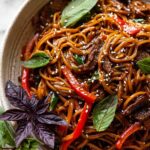
Korean Beef Sesame Noodles in 20 Minutes Recipe
- Prep Time: 15 minutes
- Cook Time: 10 minutes
- Total Time: 25 minutes
- Yield: 4 servings
- Category: Main Course
- Method: Stovetop
- Cuisine: Korean
- Diet: Gluten Free
Description
This 20 Minute Korean Beef Sesame Noodles recipe blends tender, thinly sliced flank steak with flavorful stir-fried vegetables and chewy brown rice noodles. Tossed in a savory, spicy sauce made from garlic, ginger, tamari, honey, and Gochujang, this dish offers a delicious balance of sweet, salty, and heat. Quick to prepare and perfect for a satisfying weeknight meal, it’s garnished with fresh basil and toasted sesame seeds for extra aroma and texture.
Ingredients
Sauce
- 4 cloves garlic chopped
- 1 tablespoon chopped fresh ginger
- 1/2 cup tamari or soy sauce
- 1/4 cup honey
- 2 tablespoons rice vinegar
- 3 tablespoons Gochujang (Korean chili paste)
- 1 tablespoon toasted sesame oil
Stir Fry
- 8 ounces brown rice noodles
- 2 tablespoons sesame oil
- 3 cups mixed stir fry vegetables
- 3 shallots, sliced
- 1 pound flank steak or chicken breast, sliced thin
- 1/4 cup toasted sesame seeds
- 1/2 cup fresh basil
Instructions
- Make the Sauce: Combine garlic, ginger, tamari, honey, rice vinegar, Gochujang, and toasted sesame oil in a glass jar. Shake or whisk thoroughly until well mixed.
- Prepare Noodles: Cook the brown rice noodles according to the package directions. Once cooked, drain and rinse them under cold water to prevent sticking.
- Cook Vegetables: Heat 1 tablespoon sesame oil in a large skillet over high heat. Add the mixed stir-fry vegetables and sauté until wilted, about 2-3 minutes. Stir in 2 tablespoons of the prepared sauce and cook until vegetables are coated, then remove them from the pan.
- Sauté Shallots and Beef: In the same skillet, add 1 tablespoon sesame oil. Add the sliced shallots and cook for 2 minutes until deeply softened. Add the thinly sliced flank steak and let sear without stirring for 2 minutes, then toss the meat and pour in the remaining sauce. Simmer for 1 minute.
- Combine and Finish: Stir in the cooked noodles and vegetables back into the skillet. Cook for an additional 2-3 minutes, tossing well, until the sauce evenly coats the noodles. Remove from heat and fold in fresh basil and toasted sesame seeds.
- Serve: Plate the noodles and garnish with extra fresh basil if desired. Enjoy immediately for best flavor and texture.
Notes
- Substitute chicken breast for flank steak to make a leaner version.
- Use gluten-free tamari to keep the dish gluten-free.
- Adjust the amount of Gochujang to control the spiciness.
- For extra crunch, add chopped peanuts or cashews as garnish.
- Make sure to rinse noodles under cold water to stop cooking and prevent clumping.
Nutrition
- Serving Size: 1 serving
- Calories: 450 kcal
- Sugar: 12 g
- Sodium: 900 mg
- Fat: 18 g
- Saturated Fat: 3 g
- Unsaturated Fat: 14 g
- Trans Fat: 0 g
- Carbohydrates: 50 g
- Fiber: 5 g
- Protein: 30 g
- Cholesterol: 70 mg