Short Rib Ragu with Pasta Recipe
If you’re craving a rich, comforting meal that feels like a warm hug on a plate, you absolutely have to try this Short Rib Ragu with Pasta Recipe. I promise, once you make it, you’ll want to keep it in your regular rotation. The tender, fall-apart short ribs combined with a deeply flavorful tomato sauce and fresh pasta—it’s honestly one of those recipes that turns dinner into an event.
Why This Recipe Works
- Deep, slow-cooked flavor: Simmering the short ribs low and slow lets the meat get tender and infuses the sauce with intense beefy richness.
- Balanced aromatics and acidity: The classic soffritto of onion, celery, and carrot builds a flavor base, while a splash of vinegar brightens the sauce beautifully.
- Perfect pasta pairing: Using wider, hearty noodles like pappardelle or tagliatelle lets the sauce cling and makes every bite satisfyingly rich.
- Versatility in serving: Whether with pasta, polenta, or roasted veggies, this ragu adapts well and never disappoints.

Ingredients & Why They Work
The magic of this Short Rib Ragu with Pasta Recipe is in the layers of flavor created by simple, quality ingredients working together. Each item adds something special, whether it’s the richness, acidity, or texture.

- Beef short ribs: I love using de-boned ribs cut into cubes for convenience and tenderness; they bring incredible flavor after slow cooking.
- Light olive oil: A neutral oil with a mild flavor that’s perfect for searing without overpowering the meat.
- White onion, celery, carrot: Classic soffritto veggies that form the aromatic backbone of the sauce.
- Garlic: Adds that essential punch and warmth to elevate the ragu.
- Tomato paste: Concentrated flavor that adds richness and deepens the sauce.
- Red wine: The acidity and tannins cut through the richness, balancing the dish beautifully.
- Broth: Adds savory depth to the sauce—beef broth works best, but chicken is a good substitute.
- Crushed tomatoes: The base of the sauce, providing freshness and body.
- Herb bundle & bay leaves: Infuse the ragu with earthy, fragrant notes while gently simmering.
- Sherry or red wine vinegar: A splash right at the end wakes up all the flavors and rounds out the richness.
- Pasta (tagliatelle or pappardelle): Wide, hearty strands that soak up this luscious sauce perfectly.
- Chopped parsley & Parmigiano Reggiano: Freshness and umami to finish every plate with flair.
Tweak to Your Taste
This Short Rib Ragu with Pasta Recipe is one I love to personalize depending on the season or what I have on hand. Feel free to experiment—you’ll find the ragu forgiving and adaptable!
- Add spice: I’ve played around adding a pinch of crushed red pepper flakes for a subtle heat that beautifully complements the richness.
- Use bone-in ribs: When I cook for guests who love a deeper meat flavor, I leave the bones in—it does make the sauce richer but takes a little extra time to shred the meat.
- Vegetarian swap: For a meat-free option, try mushrooms and lentils in a similar ragu style, though it won’t quite match the unctuousness of short ribs.
- Switch the pasta: Sometimes I use cavatelli or orecchiette to catch even more sauce—and it’s a nice surprise texture!
Step-by-Step: How I Make Short Rib Ragu with Pasta Recipe
Step 1: Season and Sear the Short Ribs Perfectly
To get that incredible depth of flavor, I start by patting the short ribs dry and seasoning them generously with kosher salt on all sides. Then, heat your oil over medium-high heat in a large Dutch oven. Don’t crowd the pot—sear the ribs in batches so you get a beautiful brown crust. This step locks in flavor and juices you don’t want to lose. After searing, set the ribs aside on a plate, and if there’s excess grease in the pot, drain most of it, leaving about two tablespoons to keep that meaty richness.
Step 2: Build Your Flavor Base with Sofrito Vegetables
In the same pot, toss in finely diced onion, celery, carrot, and minced garlic. Sauté for around 3-4 minutes on medium-high until the onion softens and starts to turn translucent. This soffritto is fundamental—it imparts a sweet earthiness that balances the meatiness beautifully. Add tomato paste next, along with a teaspoon of salt and cracked black pepper, and stir it for another 2-3 minutes. This step caramelizes the tomato paste and develops more complexity in your sauce.
Step 3: Deglaze and Simmer to Perfection
Pour in the red wine to deglaze your pot, scraping up all those golden bits stuck to the bottom—that’s where a ton of flavor lives! Return the seared ribs to the pot, pour in your broth and crushed tomatoes, and toss in your herb bundle and bay leaves. Bring everything to a low simmer, cover but keep the lid slightly ajar so steam can escape, allowing the sauce to reduce gently.
Let the ragu cook for 2 to 2 ½ hours. (I know, patience is a virtue here!) Stir occasionally. If it looks like it’s drying out, splash in some broth or water and maybe lower the heat a smidge. The ribs are ready when they’re so tender they practically fall apart with a fork. If after 2 ½ hours they’re still a bit tough, just keep simmering—you want that melt-in-your-mouth texture.
Step 4: Shred Meat and Perfect the Sauce
Once cooked, remove and discard the bay leaves and herb bundle. If your ribs are boneless, go ahead and shred the meat right in the pot using two forks or tongs. With bone-in ribs, carefully remove the bones (and any cartilage if you prefer) before shredding. This carnivorous treasure is the heart of your ragu! Taste your sauce and adjust the seasoning with more salt, pepper, and don’t forget that splash of sherry or red wine vinegar—it brightens the whole dish.
If you prefer a thicker sauce, keep simmering uncovered for 15 to 30 more minutes until it’s cozy and luscious.
Step 5: Cook Pasta & Serve with Joy
Cook your pasta according to package directions until al dente. I love tagliatelle or pappardelle here—those ribbons soak up all that meaty sauce wonderfully. Drain, toss with your ragu, and pile it high on plates. Finish with generous shavings of Parmigiano Reggiano and a sprinkle of fresh chopped parsley for brightness and a bit of color. Serve immediately and bask in your creation!
Pro Tips for Making Short Rib Ragu with Pasta Recipe
- Don’t rush the sear: Taking your time to brown the short ribs properly ensures maximum flavor; avoid overcrowding to prevent steaming the meat.
- Keep an eye on liquid levels: I always peek in every 30 minutes or so to add broth if it’s drying too fast—this prevents burning and keeps the meat luscious.
- Vinegar trick: Adding vinegar at the end wakes up the sauce, balancing richness and making it taste fresh, so don’t skip it!
- Shred gently: When pulling meat off the bones, remove cartilage to avoid unwanted chewy bits that some guests might not enjoy.
How to Serve Short Rib Ragu with Pasta Recipe

Garnishes
I always garnish with fresh chopped parsley because it adds a vibrant freshness that cuts through the richness. Then, grating Parmigiano Reggiano right before serving brings nutty, salty depth that makes each forkful sing. If I’m feeling fancy, a drizzle of good-quality extra virgin olive oil elevates the finish beautifully.
Side Dishes
This ragu pairs like a dream with a simple green salad tossed with lemon vinaigrette—something crisp to contrast all that luscious meatiness. I also love serving crusty garlic bread or a rustic Italian loaf to sop up every last bit of the sauce. If you want to keep it hearty, creamy polenta is a spectacular base instead of pasta.
Creative Ways to Present
For special occasions, I’ve served this ragu layered between sheets of fresh pasta as a rustic lasagna with a béchamel topping—everyone went wild for it. Another fun idea is stuffing the ragu into homemade ravioli, turning a cozy weeknight dinner into something truly special. Presentation with fresh herbs and a sprinkle of toasted pine nuts adds a lovely texture and pops of color.
Make Ahead and Storage
Storing Leftovers
After cooling, I store leftover ragu in an airtight container in the fridge for up to 3 days. The flavors actually deepen overnight, so it tastes even better the next day. Just be sure to keep the pasta separate if you plan to reheat—it keeps everything from getting too mushy.
Freezing
This ragu freezes beautifully. I portion it out into freezer-safe containers or bags and label them with date. When you’re ready for a quick weeknight dinner, just thaw overnight in the fridge or gently reheat straight from frozen on the stove with a splash of broth to loosen the sauce if needed.
Reheating
I reheat ragu gently on the stove over medium-low heat, stirring often to prevent sticking. Adding a little water or broth helps loosen the sauce if it’s thickened up. Pair with fresh pasta or heat up some polenta for a satisfying meal all over again.
FAQs
-
Can I use bone-in short ribs for this recipe?
Absolutely! Bone-in short ribs add extra depth of flavor to the ragu. Just be prepared to spend a little more time shredding the meat off the bones once cooked. The stew will be rich and delicious either way.
-
What pasta works best with Short Rib Ragu?
Hearty, wide pasta shapes like pappardelle or tagliatelle are perfect because they hold onto the thick sauce well. Orecchiette, rigatoni, and cavatelli are also great alternatives if you want variety.
-
How long does it take to make Short Rib Ragu with Pasta Recipe?
Plan on about 30 minutes for prep and searing, plus 2 to 2 ½ hours simmering to get the ribs tender and sauce rich, making total cook time around 3 hours to 3 and a half hours. It’s worth it, I promise!
-
Can I make this recipe ahead of time?
Yes! The ragu actually tastes better after sitting overnight as the flavors meld. Store the ragu and pasta separately and reheat gently before serving for a delicious make-ahead meal.
Final Thoughts
This Short Rib Ragu with Pasta Recipe holds a special place in my heart because it brings people together—there’s something about the slow-simmered richness and comforting aroma that just makes any night feel cozy. Whether it’s a family dinner or a date night at home, I promise you’ll get so many compliments (and probably want to make multiple batches!). Make it your own, enjoy the process, and savor every saucy bite.
Print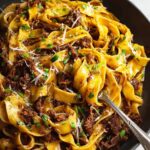
Short Rib Ragu with Pasta Recipe
- Prep Time: 30 minutes
- Cook Time: 3 hours
- Total Time: 3 hours 30 minutes
- Yield: 6 servings
- Category: Main Course
- Method: Stovetop
- Cuisine: Italian
Description
A rich and hearty Short Rib Ragu featuring tender braised beef short ribs simmered in a savory tomato and red wine sauce, perfect for serving over thick pasta like pappardelle or tagliatelle. This deeply flavorful Italian-inspired dish makes a satisfying main course for any occasion.
Ingredients
Protein
- 2 lbs beef short ribs, de-boned, cut into 2 inch cubes
Vegetables & Aromatics
- 1 cup white onion, finely diced
- ½ cup celery, finely diced
- ½ cup carrot, finely diced
- 4 garlic cloves, finely minced
Liquids & Canned Goods
- 1 cup red wine
- 1 cup broth (beef or chicken)
- 1 ¾ cup crushed tomatoes (14 oz can)
Oils & Vinegar
- 2 tablespoons light olive oil (or vegetable or avocado oil)
- 2 tablespoons sherry or red wine vinegar
Herbs & Seasonings
- Kosher salt (to taste)
- Fresh cracked pepper (to taste)
- Herb bundle (rosemary, thyme, parsley stems)
- 2 bay leaves
Other
- 2 tablespoons tomato paste
- 1 lbs pasta (tagliatelle or pappardelle)
- Chopped parsley and grated Parmigiano Reggiano for garnish
Instructions
- Season and Sear: Season the short ribs generously with kosher salt on all sides. In a large braiser or Dutch oven over medium-high heat, add 2 tablespoons of light olive oil. Sear the short ribs on all sides without crowding the pot, doing this in batches if necessary. Transfer the seared ribs to a plate and remove excess grease from the pot, leaving no more than 2 tablespoons.
- Sauté Vegetables: Add the diced onion, celery, carrot, and minced garlic to the same pot. Sauté on medium-high heat for 3 to 4 minutes until the onion softens.
- Add Tomato Paste and Seasonings: Stir in the tomato paste, 1 teaspoon kosher salt, and ½ teaspoon fresh cracked pepper. Cook for an additional 2 to 3 minutes to develop flavor.
- Deglaze the Pot: Pour in the red wine, scraping the bottom of the pot to loosen all browned bits.
- Simmer the Ragu: Return the seared short ribs to the pot. Add broth, crushed tomatoes, the herb bundle, and bay leaves. Bring to a low simmer, cover with the lid slightly ajar to allow steam to escape, and cook for 2 to 2 ½ hours. Check occasionally and add broth or water if the sauce gets too dry; reduce heat if possible.
- Check for Tenderness: The ribs are done when fork-tender and falling apart. If not tender by 2 ½ hours, continue simmering for another 30 minutes.
- Shred the Meat: Remove and discard the bay leaves and herb bundle. If using boneless ribs, shred the meat directly in the pot using tongs or forks. If bone-in, carefully remove the bones and shred the meat, discarding cartilage if desired.
- Adjust Seasoning and Reduce Sauce: Taste and adjust seasoning with salt, pepper, and vinegar. If the sauce is too thin, simmer uncovered for an additional 15 to 30 minutes to thicken.
- Cook Pasta and Serve: Cook pasta according to package directions. Serve the ragu over the pasta, garnished with chopped parsley and grated Parmigiano Reggiano.
Notes
- Use boneless short ribs cut English style in cubes for convenience, or bone-in ribs for more flavor.
- Stewing beef cubes can be substituted for a more affordable option.
- This ragu can be enjoyed over pasta, polenta, as ravioli filling, in lasagna, as a side to roasted vegetables, or even over hummus.
- Recommended pasta shapes include pappardelle, tagliatelle, orecchiette, rigatoni, or cavatelli for a hearty pairing.
- Make sure to avoid crowding the pot when searing to get a proper crust on the meat.
- Adjust liquid as needed during slow simmer to prevent drying out.
Nutrition
- Serving Size: 1 serving
- Calories: 550 kcal
- Sugar: 6 g
- Sodium: 600 mg
- Fat: 28 g
- Saturated Fat: 10 g
- Unsaturated Fat: 15 g
- Trans Fat: 0 g
- Carbohydrates: 35 g
- Fiber: 5 g
- Protein: 45 g
- Cholesterol: 120 mg